

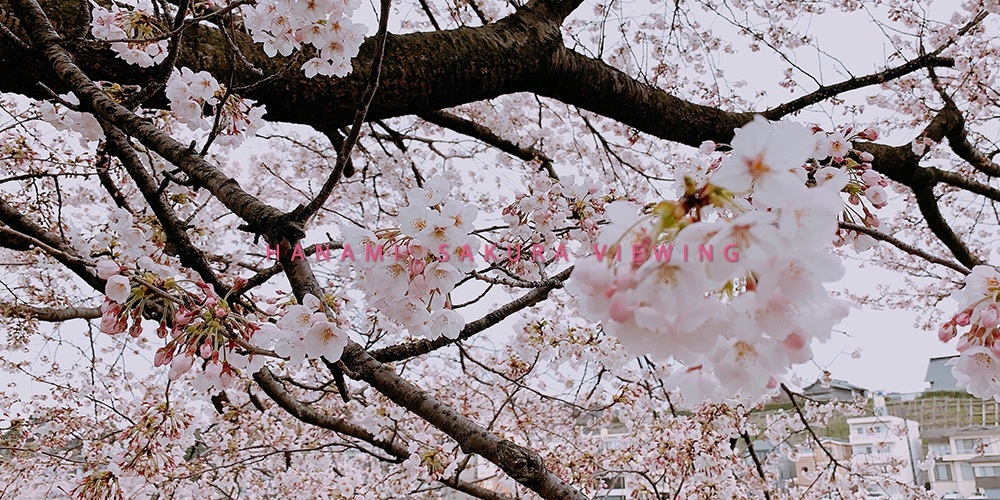
[ SEASON ]
Although Hanami literally means flower viewing, we mainly use the term for viewing the Sakura cherry blossoms, somewhat of a springtime custom in Japan. It’ll blow your mind when you see the cherry blossoms bloom all over Japan from the end of March to the beginning of May. The custom...
>> FULL STORY
[ Kaga City ]
Ishikawa prefecture boasts three regions well-known for lacquerware. But are they all the same? Of course not! Each region’s wares have different features due to their unique histories. Wajima city is famous worldwide for its fine lacquering ...
>> FULL STORY


[Nanao City]
For many international tourists interested in the peninsula, a road trip may be the main thing they consider enjoying while there. However, there are not too many adventurous activities to enjoy around the waterfront. Nevertheless, it’s ...
>> FULL STORY

[ KANAZAWA ]
It all began when one of my friends learned the art from a young master a few years ago. Since then she quickly got into it, and has made so many thimbles! “For a person who has a different background, like ...
>> FULL STORY

[ In and Around ]
Once upon a time, many kinds of indigenous vegetables were cultivated in and around Kanazawa during the feudal era. Since consumers controlled the market, the farmers were forced to bend to their demands. ...
>> FULL STORY
[ KANAZAWA ]
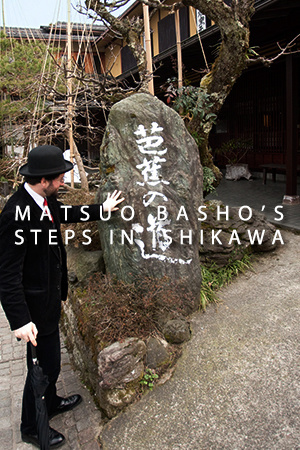
Bashô had left Kanazawa at the end of summer, heading south to Echizen Province, the northern part of nowadays coastal Fukui prefecture. On his way, he and his companion had started to catch brief glimpses...
>> FULL STORY
Kanazawa Area
Kenrokuenn Garden
Following Matsuo Bashô’s steps in Ishikawa - 1/6 [Introduction]
Following Matsuo Bashô’s steps in Ishikawa - 2/6 [Kanazawa]
Noto Area
Mitsukejima Island
Kaga Area
Following Matsuo Bashô’s steps in Ishikawa - 3/6 [Komatsu City]
Following Matsuo Bashô’s steps in Ishikawa - 4/6 [Natadera Temple]
Following Matsuo Bashô’s steps in Ishikawa - 5/6 [Yamanaka Onsen Town]
Following Matsuo Bashô’s steps in Ishikawa - 6/6 [Daishoji District]
Rosanjin in Yamashiro Onsen Town
Stroll Kanazawa in Rental Kimono - 1/2 [Kimono Rental]
Stroll Kanazawa in Rental Kimono - 2/2 [Kimono Stroll]
January
Enyukai: Geisha Party
February
Setsubun-Sai Festival
AUGUST
Issaki Hoh-Toh Matsuri
November
Enyukai: Geisha Party